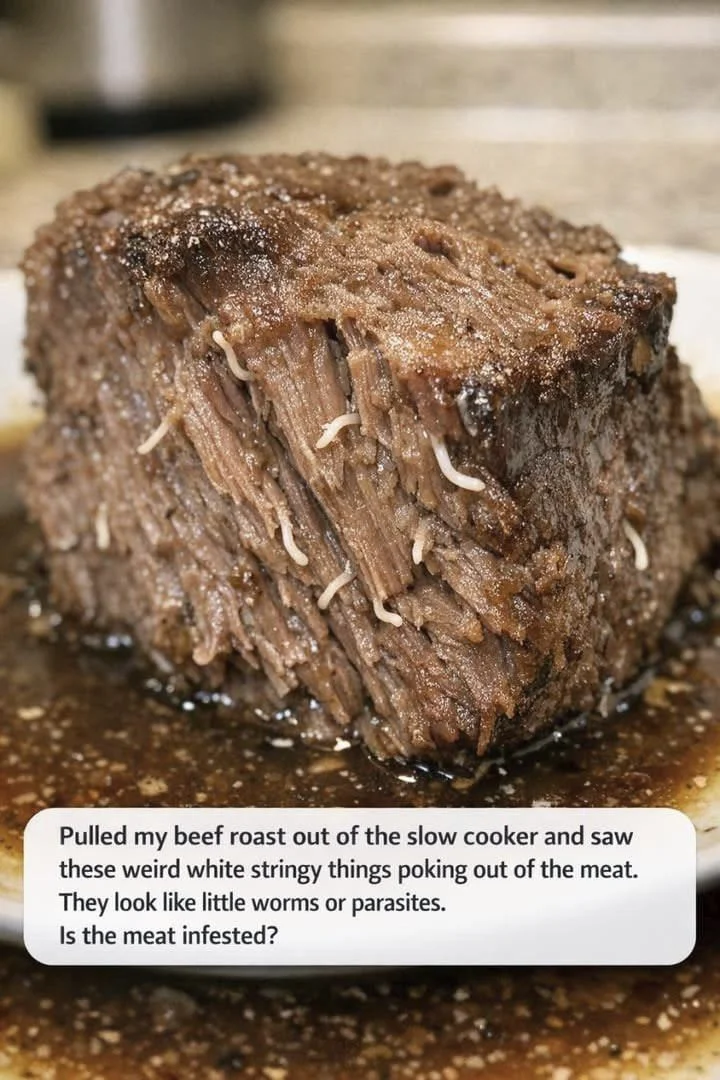
Common Cuts of Beef Most Likely to Show These White Strings
Certain cuts of beef are more likely to show these white strings because they contain more connective tissue. Cuts such as chuck roast, brisket, and round roast are common examples. These cuts benefit from slow cooking because the extended time helps soften the connective tissue.
These cuts are often flavorful and well-suited for slow-cooked meals. The presence of these white strings is a normal characteristic and not a cause for concern.
What Experts Say About This Phenomenon
Food experts agree that the appearance of white strings in slow-cooked beef is usually due to the breakdown of connective tissues. This is a normal and expected result when cooking certain cuts of meat, especially those rich in collagen.
They also note that this is often misunderstood and may cause unnecessary concern. Understanding how meat behaves during cooking can help clarify the situation.
How to Prepare and Cook Roasts for Better Texture and Appearance
To reduce the appearance of white strings, you can trim excess fat and visible connective tissue before cooking. While this won’t remove them entirely, it can make them less noticeable. Searing the meat before slow cooking can also improve texture and presentation.
Marinating the meat beforehand may help soften connective tissues, leading to a smoother result. Using a properly covered slow cooker helps maintain moisture and ensures even cooking.
When It’s Safe to Eat the Roast
If your roast has been cooked to the proper internal temperature and does not show signs of spoilage—such as an unpleasant smell, unusual color, or abnormal texture—it is generally safe to eat. The white strings are simply a natural part of the cooking process and do not indicate a problem.