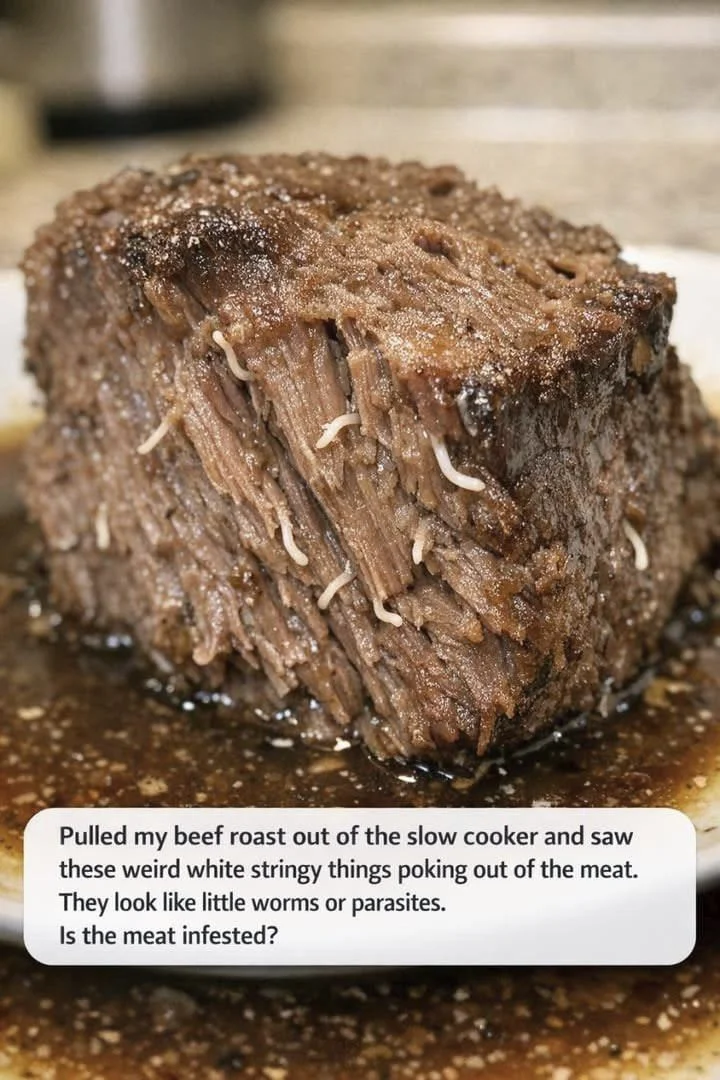
Before you throw away your hard work in a panic, it’s important to take a closer look at what you’re seeing. These white, stringy bits might not be what you think. In fact, they are often a normal part of the meat’s structure or a result of the cooking process. This article explains what these white strings likely are, why they appear, and when you should pay attention.
Why Those White, Stringy Bits Probably Aren’t Anything Harmful
It’s natural to feel concerned if you notice something unusual in your food, especially if it looks unfamiliar. However, in most cases, these white, stringy bits are not anything harmful but rather parts of the meat’s structure known as connective tissue. Connective tissue is made up of proteins like collagen, which is common in beef roasts and can appear stringy after slow cooking.
Issues related to contamination in beef are very uncommon, especially in countries with strict food safety standards. Moreover, any potential unwanted elements typically do not survive proper cooking, particularly at the temperatures used in slow cooking. If you’ve cooked your meat to the appropriate internal temperature, it’s very unlikely that anything unsafe remains.
Understanding Muscle Fibers and Connective Tissue in Beef
Muscle fibers and connective tissues are essential parts of any cut of meat. Muscle fibers are the main portion of the meat, while connective tissues hold these fibers together and attach muscles to bones. Beef contains a significant amount of connective tissue, which is largely composed of collagen.
When these tissues are cooked—especially in a slow cooker—the collagen can become gelatin-like and appear as white, stringy bits. This is particularly noticeable in cuts like chuck roast or brisket, which are known for their high connective tissue content. These stringy appearances are a natural result of the cooking process and are not a sign of spoilage.
What Slow Cooking Does to Meat Structure
Slow cooking is a method that uses low temperatures over a longer period to break down tough fibers and connective tissues in meat. This process transforms collagen into gelatin, which gives the meat a tender texture and rich flavor.
As the collagen breaks down, it can sometimes create white, stringy appearances on the surface of the meat or throughout the inside. This is especially common in cuts that contain a high amount of connective tissue. The slow, moist environment of a slow cooker is ideal for this transformation.
How Contracting Fibers Can Become Visible in a Roast
During the slow cooking process, the muscle fibers in the meat contract and lose moisture. As the fibers contract, they can sometimes expose the connective tissues, which appear as white strings. This effect is more noticeable in cuts with significant marbling or connective tissue.
The appearance of these fibers becoming visible can seem unusual, but it is a natural part of cooking. Heat causes the muscle fibers to tighten, and as they do, the softer, gelatin-like collagen may become more noticeable within the meat.
Normal White Strings Versus Other Unusual Findings: Key Visual Differences
While it’s easy to misinterpret these white strings, there are clear differences between normal connective tissue and anything unusual. Connective tissue is typically soft, gelatin-like, and can be easily pulled apart with a fork. It often appears in clusters or thin lines.
Anything unusual would appear more structured and separate within the meat. Additionally, such cases are very uncommon in properly sourced beef due to strict inspection and safety standards.
When to Pay Attention: Smell, Color, and Texture Signs
While the white strings themselves are usually harmless, other indicators can help you determine whether your meat is still good. Check for any unpleasant odor; fresh beef should have a clean, mild smell. A strong or sour smell may indicate a problem.
Also look at the color and texture. The meat should have a consistent color—usually a rich brown after cooking—and should not have any sticky or overly wet surface. If the meat feels unusual or shows discoloration, it may not be suitable for consumption.
Safe Cooking Temperatures for Properly Cooked Beef
To ensure your beef is safe to eat, it’s important to reach the correct internal temperature. Food safety guidelines recommend cooking beef to a minimum internal temperature of 145°F (63°C), followed by a short resting time. Slow-cooked beef often exceeds this temperature due to the extended cooking time.
These temperatures help ensure that the meat is properly cooked and safe to consume. Using a meat thermometer can help you confirm this.