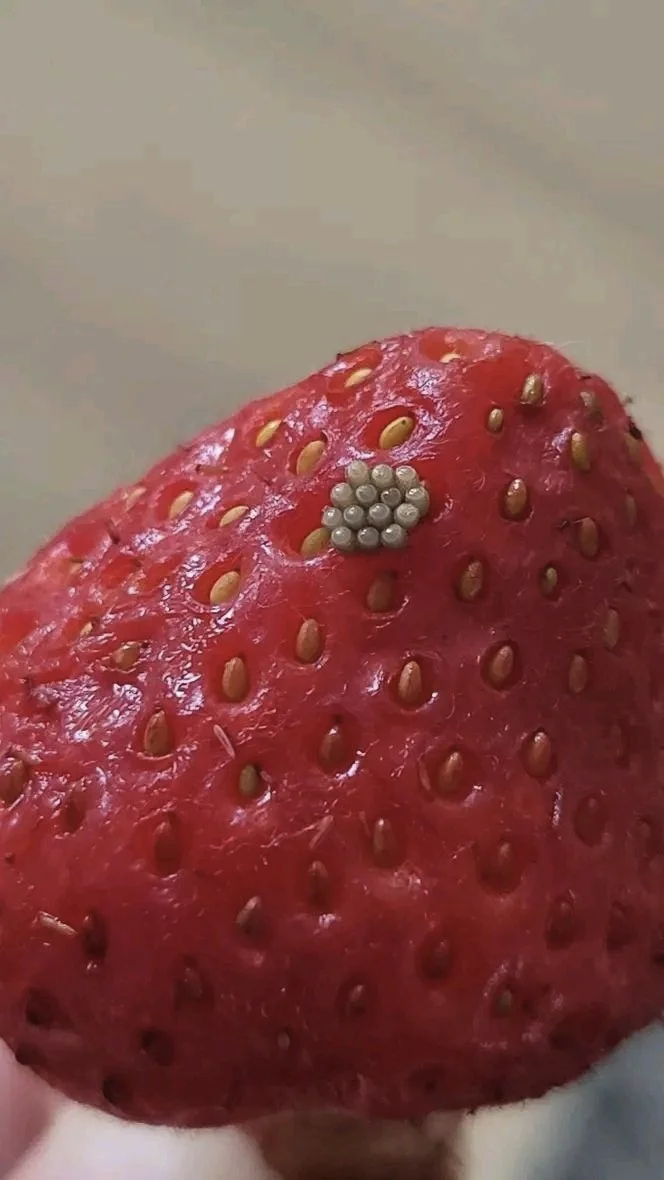
4. Environmental and Agricultural Factors
The presence of such eggs may be linked to farming practices. Strawberries are often grown in open fields or greenhouses, where they are exposed to insects and environmental elements. Even with modern agricultural techniques, it is difficult to completely eliminate insect interaction without the heavy use of pesticides.
Organic farming, in particular, minimizes chemical use, which can increase the likelihood of encountering insects or their eggs. While this is generally considered healthier and more environmentally friendly, it may also require consumers to be more vigilant when washing and inspecting produce.
5. Food Safety Considerations
When encountering unusual formations on food, it is always best to err on the side of caution. Proper washing of fruits and vegetables is essential to remove dirt, bacteria, and possible contaminants. In cases like the one shown in the image, it is advisable not to consume the affected fruit.
If you notice clusters, discoloration, or anything that appears abnormal, it is safer to discard the fruit. Food safety is crucial, and consuming contaminated or questionable produce can pose health risks, even if they are minor.
6. Psychological Reaction and Awareness
Images like this often go viral because they trigger a strong psychological response. Many people feel discomfort or disgust when seeing clustered patterns, a phenomenon sometimes linked to trypophobia. This reaction can amplify concern, even when the actual risk is low.
Nevertheless, such images serve an important purpose: they raise awareness about food inspection and hygiene. They remind consumers to look closely at what they eat and to adopt safe practices in food preparation.