🛒 Ingredients (Simple, High-Quality)
|
Ingredient
|
Why It Matters
|
|---|---|
|
3 large eggs, room temperature
|
Room temp eggs cook more evenly; fresh eggs have firmer whites and richer yolks
|
|
1 tbsp unsalted butter (plus extra for finishing)
|
Unsalted lets you control seasoning; butter adds flavor and creaminess
|
|
1–2 tbsp whole milk, cream, or crème fraîche (optional)
|
Adds richness and slows protein coagulation for extra-soft texture
|
|
Pinch of salt (added at the end)
|
Salt added early can break down proteins and make eggs watery; finish with salt for best texture
|
|
Freshly ground black pepper
|
Added at the end to preserve its bright, aromatic flavor
|
🌿 Optional upgrades: Fresh chives, dill, or tarragon; a sprinkle of flaky sea salt; a dash of hot sauce
🍳 Step-by-Step Instructions (Cloud-Like Eggs in 5 Minutes)
1. Prep Your Station
- Crack eggs into a bowl. Add milk/cream if using.
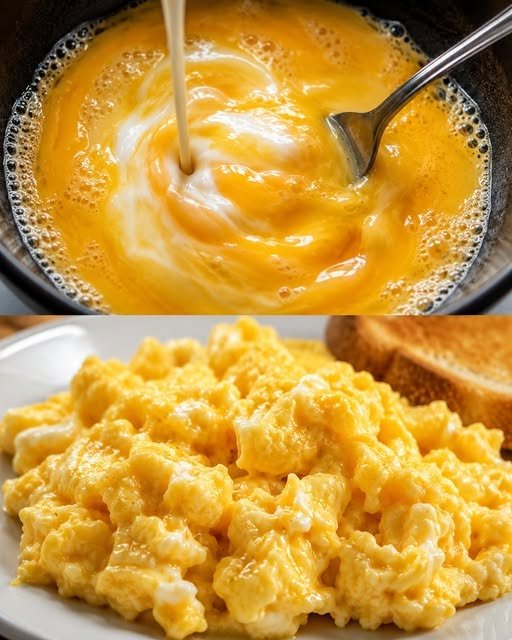
- Whisk gently with a fork until just combined—no need to over-whisk. Small streaks of white are fine.
- Have your butter, salt, pepper, and finishing herbs ready.
2. Heat the Pan Low and Slow
- Place a non-stick skillet over low to medium-low heat.
- Add 1 tbsp butter and let it melt completely—but don’t let it brown.
3. Add Eggs and Stir Gently
- Pour in the egg mixture.
- Using a silicone spatula or wooden spoon, stir slowly and constantly: push eggs from edges toward center, folding gently.
- Don’t rush. This should take 3–5 minutes.
4. Watch for the “Soft Set” Stage
- Eggs are ready when they form soft, creamy curds but still look slightly wet and glossy.
- They should not be fully set or dry-looking.
5. Remove from Heat Early
- Take the pan off the burner when eggs are about 90% done.
- Stir in an extra ½ tbsp cold butter (optional but luxurious) and your fresh herbs.
- Season with salt and pepper now—not before.
6. Serve Immediately
- Transfer to a warm plate right away. Eggs continue cooking from residual heat, so serving fast preserves that perfect texture.
⏱️ Total time: 5–7 minutes. Patience pays off.
🔧 Pro Tips for Foolproof Success
✅ Use the Right Pan
- Non-stick is ideal for beginners. Carbon steel or well-seasoned cast iron also work—but require more attention.
✅ Don’t Over-Whisk
- Over-whisking incorporates too much air, creating foam that can make eggs dry. Gentle mixing is enough.
✅ Control Your Heat
- If eggs start browning or cooking too fast, lift the pan off the burner briefly to cool.
✅ The “Off-Heat” Trick
- For extra control, cook eggs using the “French method”: alternate 30 seconds on heat, 30 seconds off, stirring constantly. This gives ultimate control over texture.
✅ Finish with Cold Butter
- Stirring in a small pat of cold butter off-heat creates an emulsion that adds incredible richness and shine.
❌ Common Mistakes (And How to Avoid Them)
|
Mistake
|
Why It Happens
|
Fix
|
|---|---|---|
|
High heat
|
Impatience; wanting eggs fast
|
Use low heat; trust the process
|
|
Over-stirring vigorously
|
Thinking “more stirring = fluffier”
|
Stir gently; fold, don’t beat
|
|
Cooking until fully set in pan
|
Fear of undercooked eggs
|
Remove when still slightly wet
|
|
Salting too early
|
Habit; recipe instructions
|
Salt at the end for best texture
|
|
Using cold eggs
|
Grabbing straight from fridge
|
Let eggs sit 10–15 mins at room temp
|
|
Crowding the pan
|
Making too many at once
|
Cook in batches if needed; eggs need space
|
🍽️ Serving Suggestions That Shine
- Classic: On buttered toast with a sprinkle of chives
- Elevated: Fold in smoked salmon, crème fraîche, and dill
- Hearty: Top with crispy bacon or breakfast sausage
- Vegetarian: Add sautéed spinach, mushrooms, or caramelized onions
- Brunch star: Serve alongside fresh fruit, pastries, and mimosas
🥐 Pro move: Warm your plates beforehand—cold plates cool eggs too fast, affecting texture.
❓ FAQs: Your Top Questions Answered
Q: Should I add milk or cream?
A: It’s optional. Milk/cream adds richness and slows cooking for softer eggs, but purists prefer eggs alone. Try both and decide!
A: It’s optional. Milk/cream adds richness and slows cooking for softer eggs, but purists prefer eggs alone. Try both and decide!
Q: Why do my eggs turn gray/green?
A: Overcooking causes a reaction between iron in yolks and sulfur in whites. Cook low and fast to prevent this.
A: Overcooking causes a reaction between iron in yolks and sulfur in whites. Cook low and fast to prevent this.
Q: Can I make scrambled eggs ahead?
A: Not ideally—they’re best fresh. But you can hold them briefly: transfer to a warm bowl, cover, and place over (not in) a pan of warm water.
A: Not ideally—they’re best fresh. But you can hold them briefly: transfer to a warm bowl, cover, and place over (not in) a pan of warm water.
Q: How do I make restaurant-style “soft scramble”?
A: Use the French method: low heat, constant gentle stirring, and remove while still slightly wet. Finish with cold butter.
A: Use the French method: low heat, constant gentle stirring, and remove while still slightly wet. Finish with cold butter.
Q: Are room-temperature eggs really necessary?
A: Not strictly, but they cook more evenly. If short on time, place cold eggs in warm water for 2–3 minutes.
A: Not strictly, but they cook more evenly. If short on time, place cold eggs in warm water for 2–3 minutes.
❤️ Final Thoughts: The Joy of Simple Perfection
Perfect scrambled eggs aren’t about perfectionism. They’re about presence—slowing down, paying attention, and trusting the process.
That first bite of creamy, custard-like eggs isn’t just breakfast. It’s a reminder that the simplest things, done with care, can bring extraordinary joy.
So tomorrow morning, crack a few eggs. Melt some butter. Stir gently. Pull them off early.
And when you take that first bite—soft, rich, perfectly seasoned—you’ll understand.
It wasn’t magic.
It was method.
And now, it’s yours.
It was method.
And now, it’s yours.
🥚 Made perfect scrambled eggs? Share your favorite add-in or serving style below—we’d love to hear how you make them your own