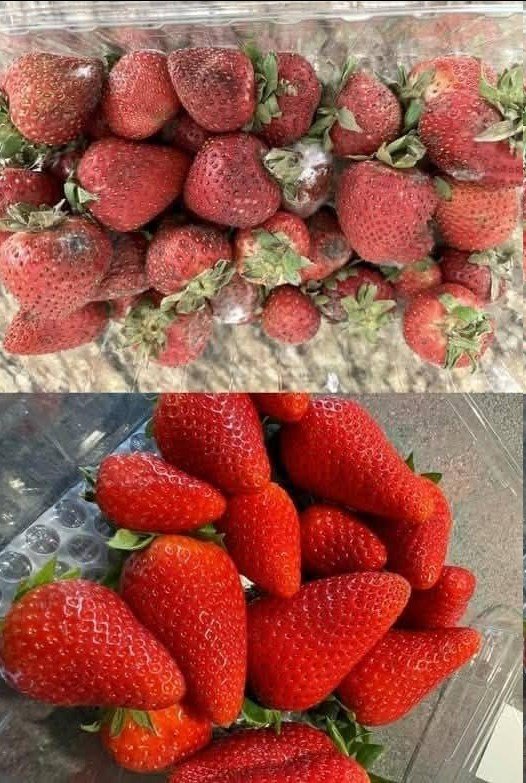
Refrigeration slows down spoilage, but only if done correctly.
Best practices:
Store strawberries in the crisper drawer of your fridge, ideally between 32–36°F (0–2°C).
Keep them away from the coldest sections (usually at the back), as freezing temperatures can damage them.
4. Freeze for Long-Term Use
Freezing is perfect if you won’t eat them all within a week.
Steps for freezing:
Gently wash and fully dry the strawberries.
Remove the stems.
Spread on a baking sheet in a single layer and freeze.
Once frozen, transfer to a freezer-safe bag or container.
Tip: Frozen strawberries can last over 6 months and are great for smoothies, sauces, and baking.
5. Store Whole, Not Sliced
Cut strawberries release juices, creating the perfect environment for mold.
What to do:
Keep strawberries whole until you’re ready to use them.
Only slice them just before serving.
6. Remove Spoiled Berries Promptly
One bad berry can spoil the entire batch.
Daily maintenance:
Check your container each day.
Immediately discard any soft, moldy, or bruised strawberries.
7. Try a Vinegar Soak to Kill Mold Spores
This method can add a few extra days to your strawberries’ shelf life.
How to do it:
Mix a solution of 1 part white vinegar to 3 parts water.
Soak the strawberries for 5 minutes.
Rinse thoroughly with clean water.
Dry them completely before refrigerating in a breathable container.
Why it works: Vinegar helps eliminate mold spores and surface bacteria that accelerate spoilage.
How Long Do Strawberries Typically Last?
Storage Method Expected Shelf Life
Room temperature 1–2 days
Refrigerator (dry) 5–7 days
Freezer (properly stored) 6+ months
Bonus: Reviving Wilted Strawberries
If your strawberries have started to look a little limp, try soaking them in ice water for 10–15 minutes. This can restore some firmness and improve their texture—especially useful for serving fresh.
Final Thoughts
Strawberries may be delicate, but they don’t have to go to waste. By following these simple yet effective strategies—especially avoiding moisture, using breathable containers, and trying the vinegar soak—you can keep them fresh and delicious for much longer.
↓ See next page ↓