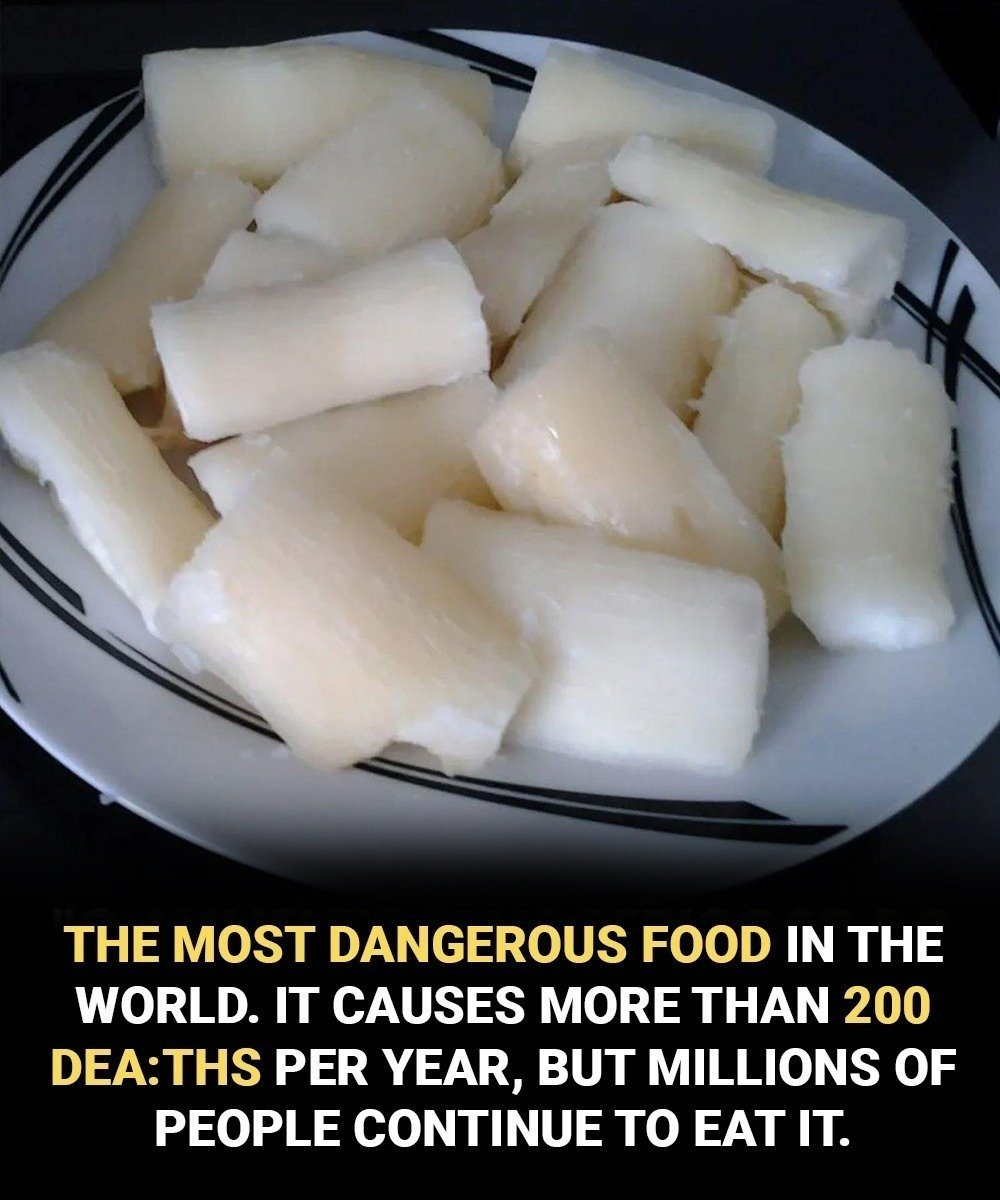
On street corners in Rio de Janeiro, it’s fried into golden mandioca frita. In West Africa, it’s pounded into smooth fufu. Across Southeast Asia, it forms the chewy pearls in your bubble tea. Cassava—also known as yuca, manioc, or mandioca—is the humble, starchy root that feeds nearly a billion people worldwide. It’s drought-resistant, calorie-dense, and incredibly versatile.
But this widely consumed food holds a secret. Within its hardy flesh lies a natural defense mechanism: the potential to produce cyanide. It’s a fact that sounds almost mythical—a plot point from a thriller. Yet, understanding this “other side” of cassava isn’t about fear; it’s about respecting the profound wisdom of traditional food preparation that has safely unlocked its nutrition for millennia.
The Science of the Secret: How Cassava “Creates” Cyanide
Not all cassava is created equal. There are two main types: